An Underrated Feature of MacBook Neo: A Colour-Accurate Display (Neo vs Apple Studio Display)
When people discuss computer displays, they always talk about the refresh rate and LCD vs OLED. I understand that high refresh rates and true blacks are appealing for gaming and media consumption, but when it comes to colour grading for video and photo, those are irrelevant. Instead, things like colour accuracy and IPS matter tremendously, and that’s what I want to highlight here as a photographer and video editor.
One—though not the only—important metric of a display’s colour accuracy is Delta E, or often written as ΔE. This is a scientific, objective measurement that, in the simplest terms, measures how different the colours on the screen are compared to their original/intended values. For example, if you create a square shape in a graphic design application, and make its fill colour a red with the RGB values of 175, 54, 60 (aka the “input”) on the screen, and then use a device to measure the red on the display itself, you won’t get the exact same RGB values because it’s impossible for any display to reproduce that colour 1 to 1, but colour-accurate displays can get very close. Delta E basically shows you how big the difference is between the “intended colour” vs what’s actually being displayed, so the smaller the value, the better.
Here’s how the ΔE of MacBook Neo’s display fares against other much costlier standalone displays and laptops:
| Display | ΔE (smaller is better) | Cost (US Retail) |
|---|---|---|
| MacBook Neo | 1.45 | $599 |
| MacBook Air (M4) | 1.54 | $999 |
| Apple Studio Display (2022) | 0.44 | $1599 |
| Dell UltraSharp U2725QE | 3.20 | $799 |
| Microsoft Surface Laptop 13" | 2.4 | $1,149 |
Regardless of what you think of Apple/macOS/MacBooks, it’s undeniable that the MacBook Neo is now the most affordable laptop if you want a decent level of colour accuracy to get into photo/video/graphic work (in sRGB/Rec709 at least)—you will not find any other laptop with similar colour accuracy in this price range.
Below is a series of photos I took displaying on the Apple Studio Display (2022) and the MacBook Neo display. I’m not attempting to make a scientific comparison with these sets of photos, but you can see that the colours and contrast in the photos on Neo’s display look almost identical to those on the ASD.
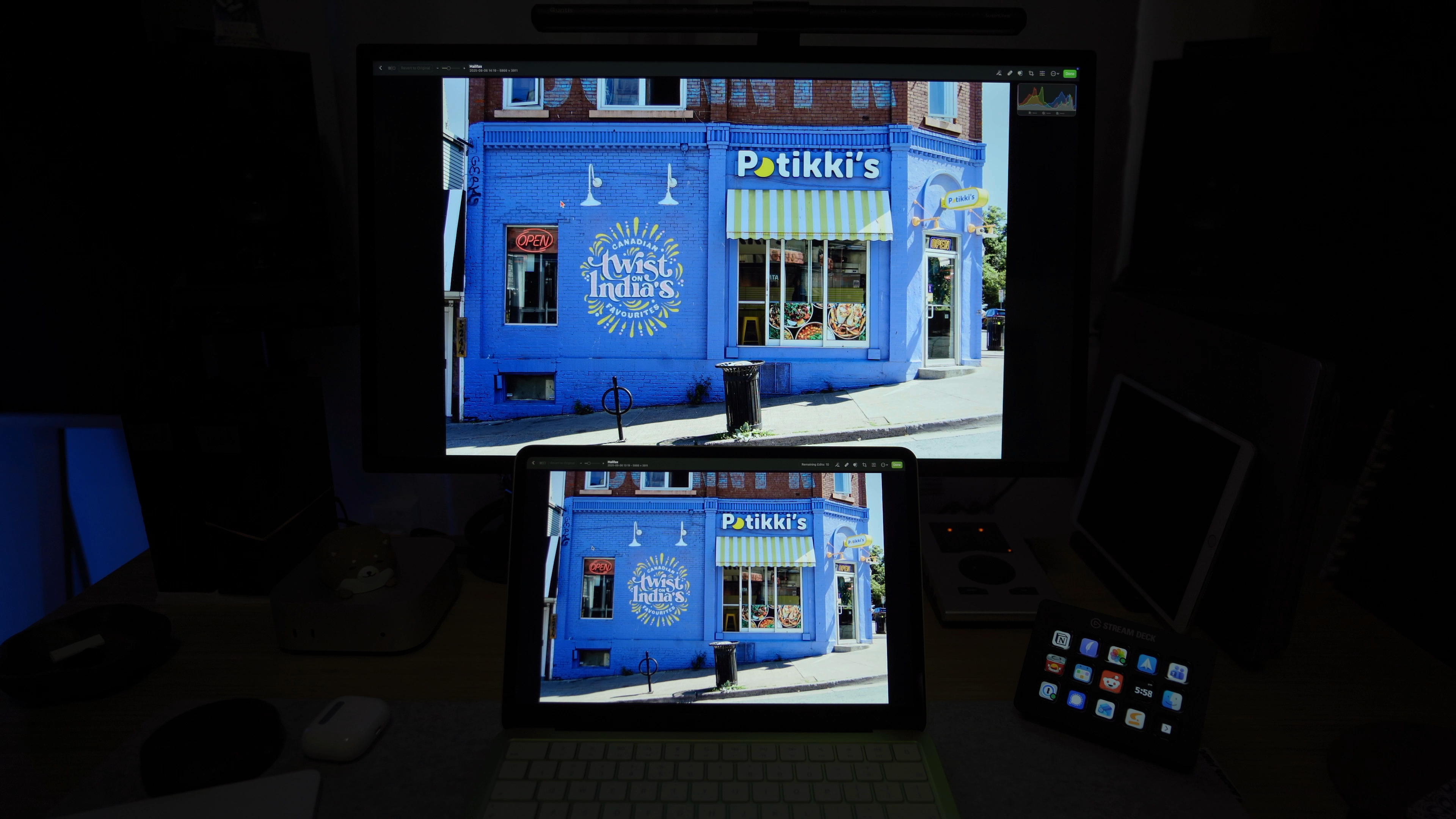
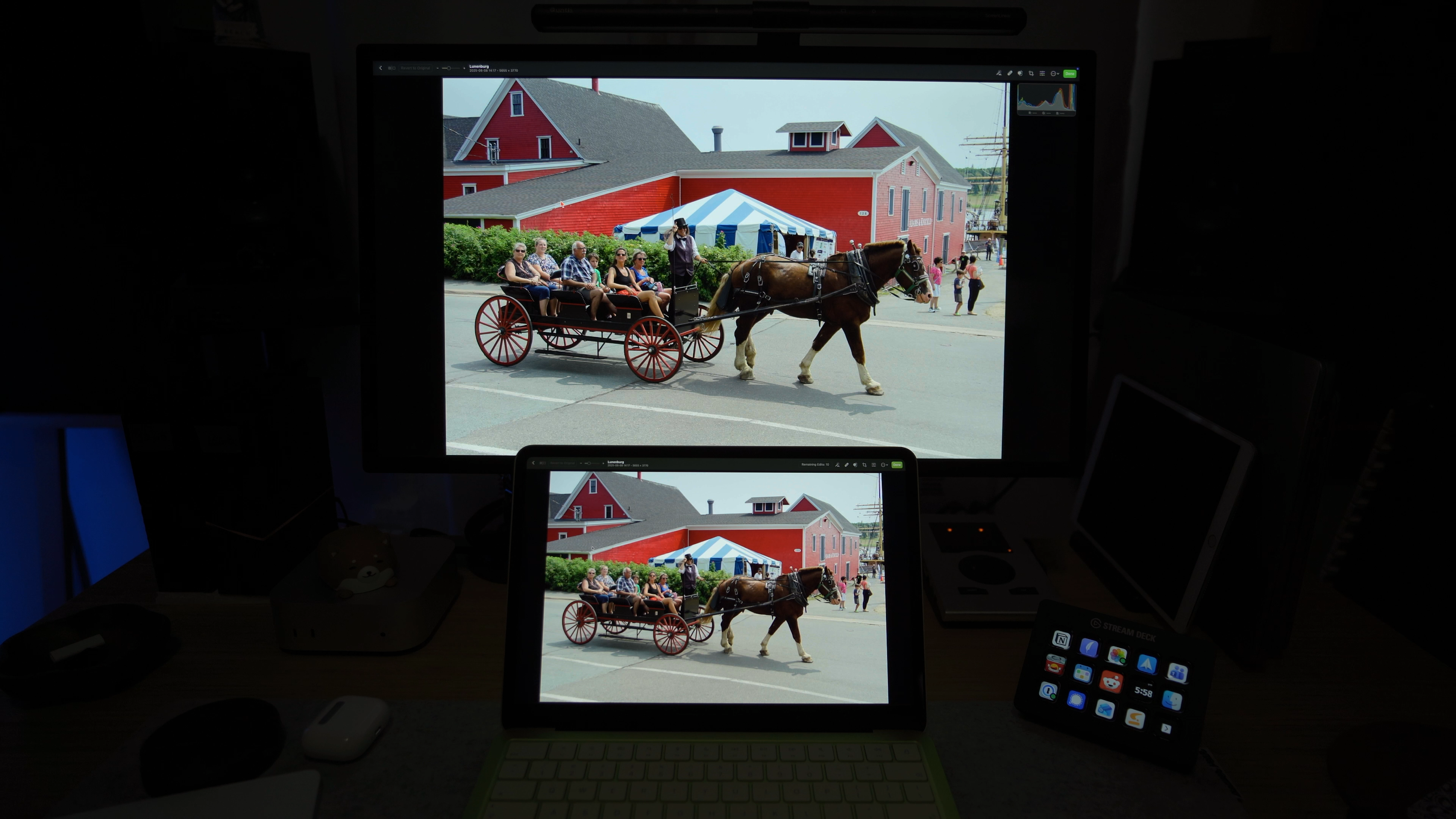
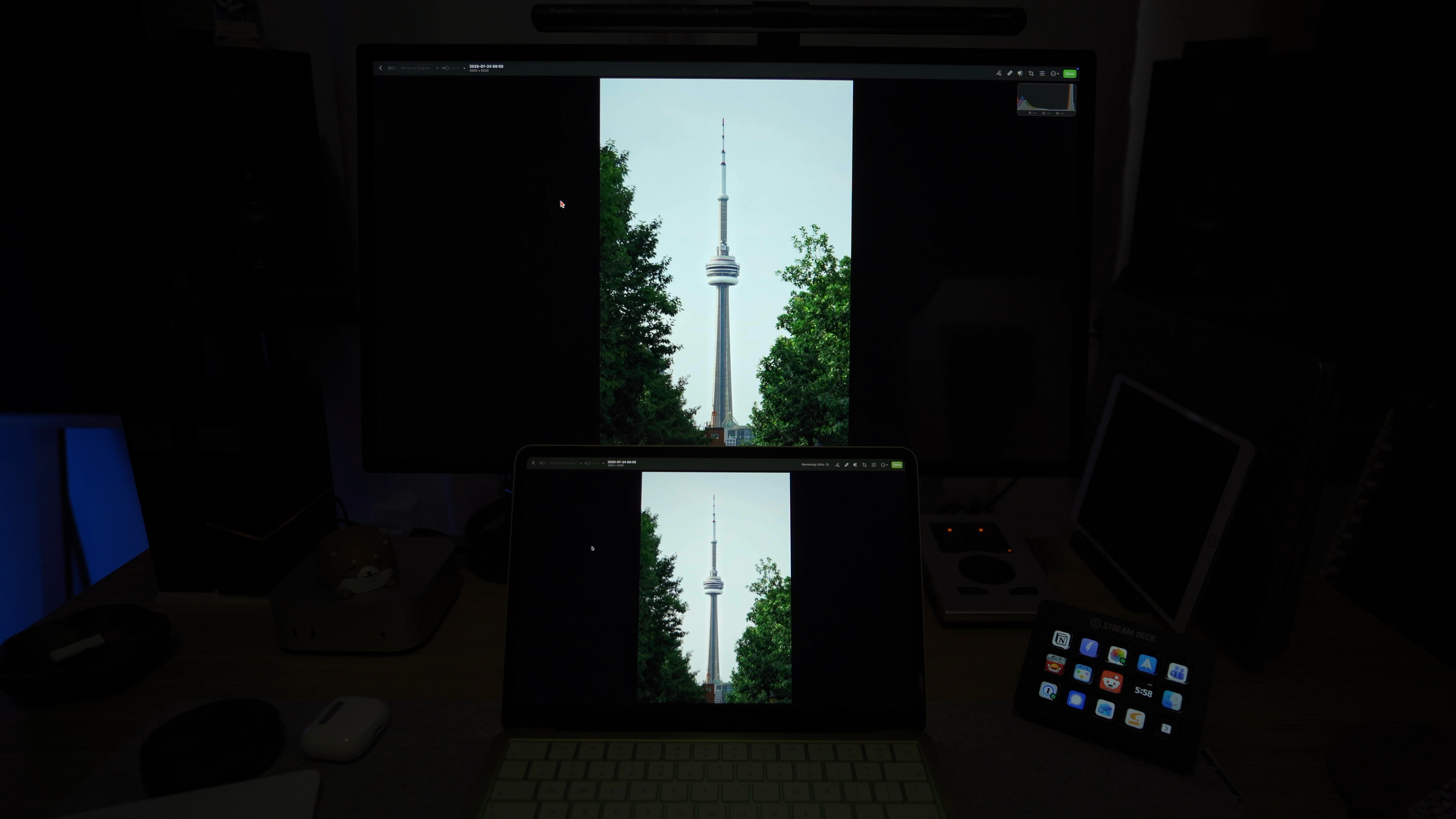
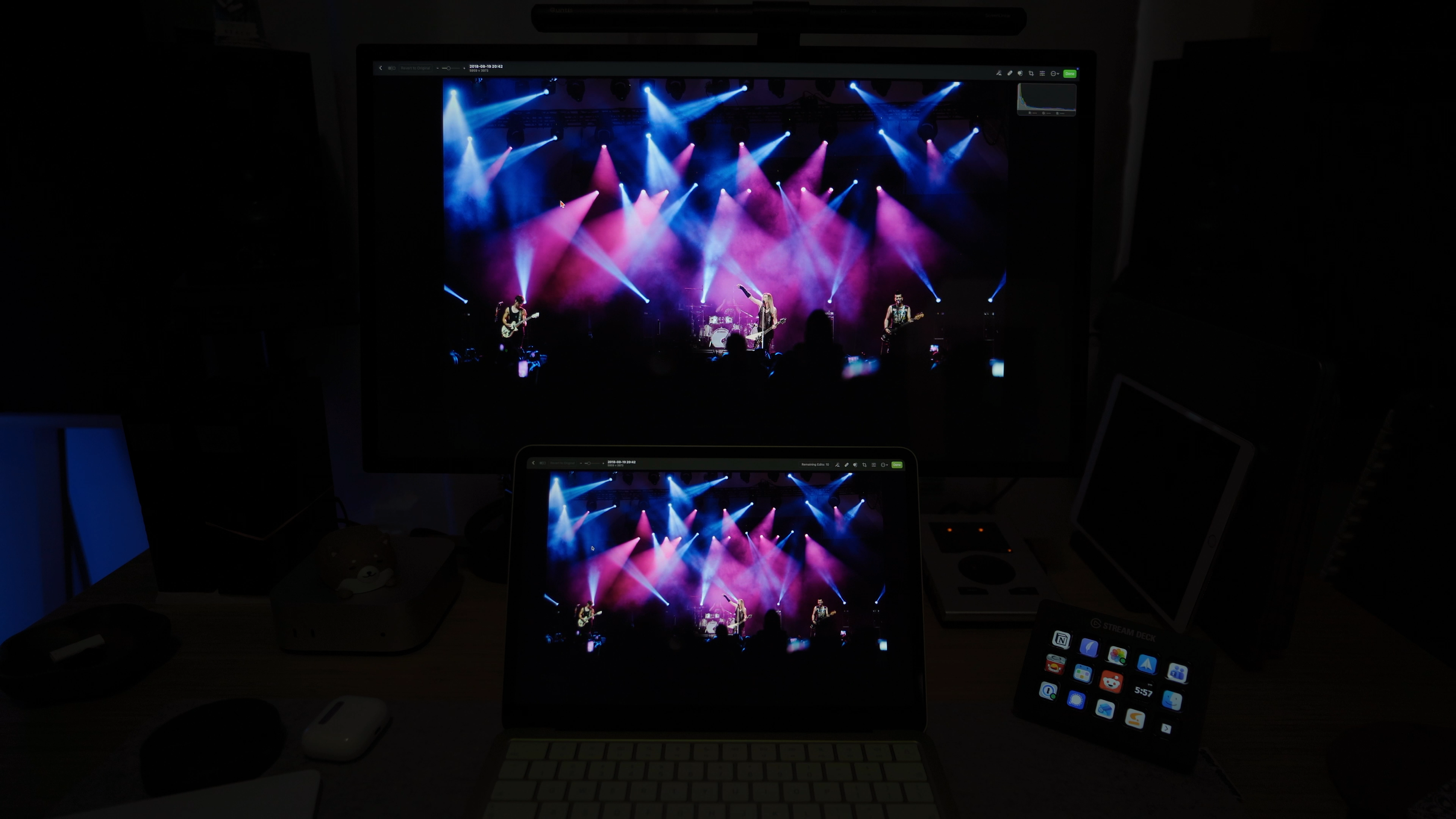
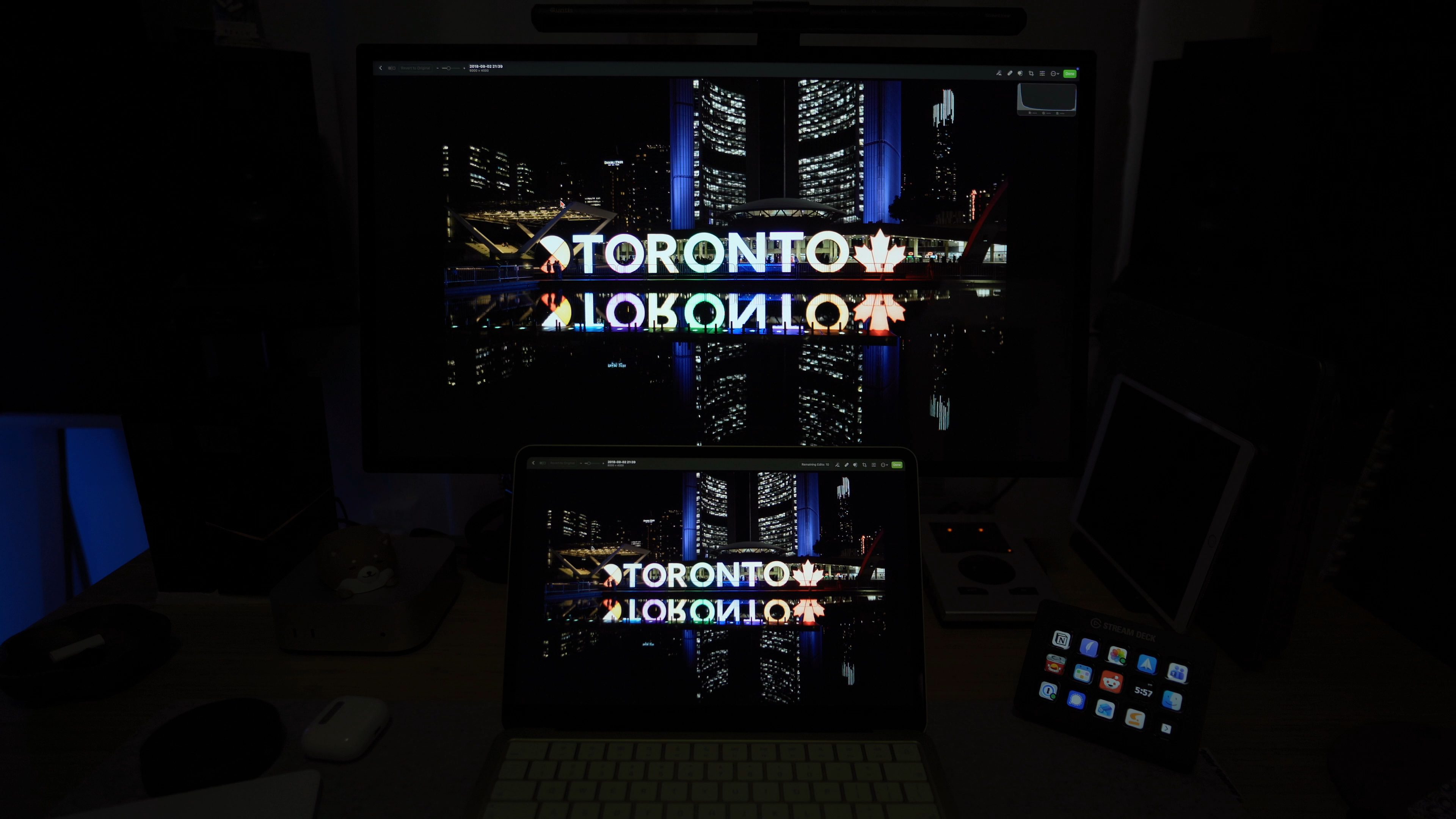
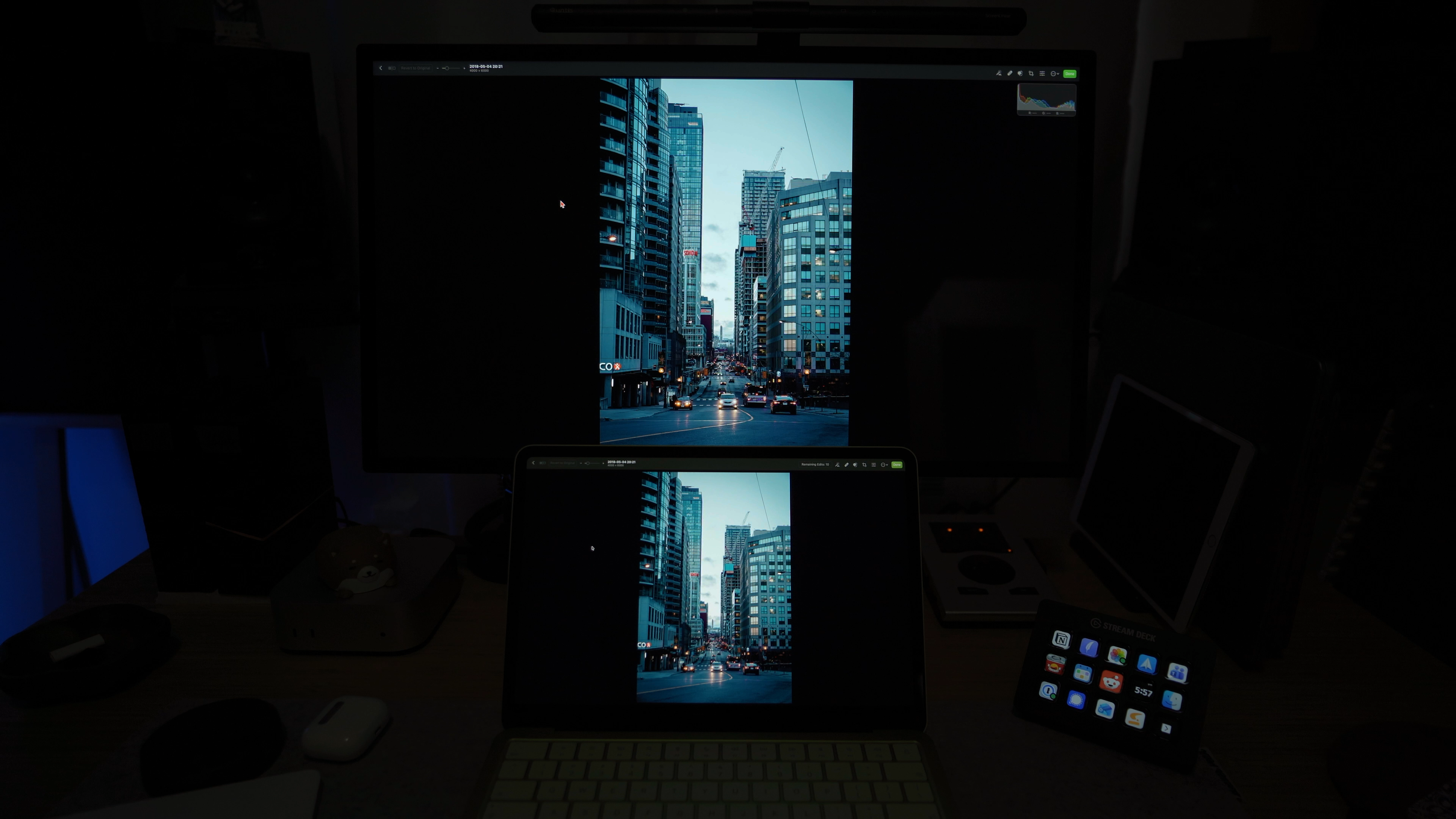
While the Apple Studio Display is not the same as “real” reference monitors costing 5 figures and more, it has incredible colour accuracy right out of the box (based on objective tests), and it’s why many media professionals—including myself—rely on it for our professional work.
In my real-life experience, photos I edited on the Neo look exactly the same when I view them on the ASD. This makes the Neo an extremely portable photo editing laptop to take with you on a trip, for example.
My work could only afford to supply me with a Dell UltraSharp at the office, and I can tell you that I cannot rely on it for any serious colour grading. Its colour accuracy and contrast really pales compared to Neo’s display, and more so to my Apple Studio Display at home. (Note that I’m talking about out-of-the-box performance here.)
Yes, the MacBook Neo can only display sRGB, but again, remember the target audience for the Neo. A student just starting to dabble into photography has a lot of other fundamentals to learn before they get to proper colour management, and I’d argue that unless you have a proper understanding of colour management, it’s better to stick to sRGB to begin with—most budding photographers share their photos digitally rather than printing them anyway. Also, being able to display a wider colour gamut doesn’t automatically make a display better if it doesn’t have good accuracy.
I’m genuinely excited about the Neo for students and those on a budget because I was once a broke student trying to get into photography. At the time, I learned about the importance of using a colour accurate display for photo editing, and because my $600 Windows laptop had horrendous colour accuracy, I ended up stretching my budget to buy a dedicated monitor for it (it was a BenQ PD2500Q, which actually had a ΔE of ≤3 so it still wasn’t a very good one). If I had the Neo back then, I would already have a very colour accurate display ready for photo editing.
I feel crazy to be singing praises for a trillion-dollar company, but until there are solid competitors for laptops with a colour-accurate display in this price range, I believe Apple has done a great service by lowering the cost to entry for photo editing and video colour grading.
Previous |
Reply via email. Subscribe to my blog via email or RSS feed.