Why I Quit Audio Engineering After 10 Years—An Honest Reflection
This year (2025) marks my 10th year as a professional audio engineer, and it’s also the year I decided to officially retire from professional audio engineering work.
It’s been a long and mostly awesome journey, and I want to give myself a chance to reflect on why I chose to quit while business was doing well, and share some insights into what it was like to run an online mixing and mastering studio.
Before you assume it—no, it wasn’t because I couldn’t find clients.
My decision to move on from professional audio engineering work came down to these few major reasons:
Client service was a tough pill to swallow
Like many music producers and audio engineers, I got into music production because I was writing and recording my own music, and I was just tinkering with my demos to get them to sound nice.
I realized that I really enjoyed doing that—mixing music in a way that sounded good to my ears.
Eventually, I became really good at mixing and mastering in general through a mix of online education and experimentation by myself. I decided to start finding clients because that seemed to be the natural trajectory of budding audio engineers (the end goal seems to always be to charge for audio engineering services), and also because I was a broke university student who didn’t want to work retail.
I didn’t grow up wanting to be an audio engineer nor was it a recent career aspiration. It was just something I picked up, found interesting and then got really good at. Earning some money from my skills just made sense. It turned out to be much more lucrative than working retail anyway—within two years, I was charging $200-250 per song, and so I would earn anywhere between $2,000-$3,000 for an album, which typically takes a month or two to finish.
For the next 10 years, I found success in my audio engineering career—I was never short for clients, I had clients all over the world, and I was able to deliver mixes and masters that my clients were happy with.
But over the course of the same 10 years, one thing that increasingly stuck out like a sore thumb as time went by was this:
What that means is that your whole purpose is always to make your clients happy and to fulfill their needs, and so whatever the clients say, goes. As a result of this, I’d had to ruin so many mixes because the clients wanted it to sound a certain way.
Quick background information for those of you who aren’t familiar with audio engineering: for a mixing engineer to make all the right decisions to make a song sound great, they need to be able to accurately monitor the music, typically via professional studio speakers in a studio that’s acoustically treated. The latter is often a painstaking and costly process.
To try to mix a song without good speakers in an acoustically treated space is like trying to add colours to a painting while wearing colour-tinted glasses—you simply cannot tell what colours you are using.
So now imagine your client listening to the mix, which you worked so hard on in your studio with proper monitoring, on some cheap speakers in an untreated room, and then saying things like: “Can you add some low end to the bass?” “The guitar tone needs some more mids [meaning: mid-range frequencies].”
It was demoralizing, discouraging and irritating. What’s the point of paying someone who has the skills and setup to make your music sound great when you don’t trust their judgement?
At the beginning, I tried my best to kindly push back, but eventually, I found that it made no real difference than just doing what the client wanted, because as long as they got what they wanted, I got myself a happy client and that was good for business.
This completely went against why I got into mixing in the first place—to create mixes that sounded good to my ears. Always having to compromise my own taste and preferences in favour of the clients’ just slowly sucked all the joy out of mixing after 10 years.
I’d also had clients who came to me saying they wanted to sound like a specific band that was really popular at the time, but then that band was also from a completely different subgenre than that of the client’s music. These clients basically just wanted to hop on a trend, rather than work with the audio engineer to create a sound that actually suited their music. The end result was always subpar—a mismatch of sound and genre.
I understand that there are audio engineers out there who have no issues with mixing for their clients (maybe they even enjoy it). I’m just not one of them.
I achieved my goals
Many audio engineers aspire to climb to the top, but my goals were much simpler:
- to offer premium mixes that rival bigger names but for much more affordable rates to support budding musicians and
- to pay my bills.
Because I was able to create competitive mixes within half a year via self-education and with minimal setup (instead of the wall of equipment you see in big recording studios), I believed that a lot of musicians were being overcharged by the more established engineers. As conceited as that makes me seem, I was proven to be right to a certain extent over the years—many clients came to me because they thought my portfolio sounded better than their locally well-known engineer who charged twice as much. (To be fair, the metal subgenre I specialized in had a specific sound that most “generalist” or traditionally-educated audio engineers weren’t familiar with since they were used to working with more mainstream genres.)
Throughout the 10 years, I maintained affordable rates by keeping my setup simple to minimize monthly overhead expenses, and made it possible for many new bands to release debut albums and singles that actually sounded professional.
One of my favourite examples of this is, back in 2016, there was this one band that consisted of a bunch of high school boys who embarked on their metal journey for the first time. They wrote an album, but barely had much of a budget to get it mixed and mastered. They certainly couldn’t afford anyone locally or even nationally (I was told audio engineers in their country tended to charge a lot—at least at the time).
But my rates were just low enough for them, so I got to make their debut album sound like a banger. They were very happy, found success in their musical endeavours, and became one of my returning clients over multiple years.
That said, one drawback of working primarily with indie artists around the world was that many of the singles and albums I worked on never ended up on the Western mainstream streaming platforms (e.g., Spotify, Apple Music etc.) or any streaming platforms at all. I also didn’t think to keep track of every track I worked on until maybe 6 years in, and so my discography looks a little lean after even 10 years in the industry because I can’t remember many of the tracks I worked on.
For the most part, I enjoyed helping budding musicians put out music they liked. It’s just that towards the end, I simply felt like a decade of this was enough. Mission accomplished many times over already; I was ready to move on.
Mixing metal was often a destruction of sound
Metal music is loud and aggressive—a perfect victim (or perpetrator?) of the loudness war where transients, frequencies and dynamics, among other things, were sacrificed just so the song can sound louder compared to other songs.
I absolutely hated this.
I’m not going to explain all the nuances of the loudness war, but all you need to know is that to make a song sound loud relatively to other songs (so it’s not about the volume knob), the audio engineer needs to deploy a series of techniques, tricks and hacks that are inherently detrimental to the fidelity of the sound.
In the pursuit of more loudness out of a song, we (the audio engineers) often try to see how much we can sacrifice without the listeners noticing during mixing. We would make sacrifices a bit here, a bit there, but in the end, all those tiny sacrifices add up, and so the resulting mix is inherently flawed.
Let me give you a more tangible example of what this actually looks like. Let’s say we recorded a simple song with acoustic drums, strummed acoustic guitars and bass guitar. This is what the song would look like, without sacrificing any audio information recorded:
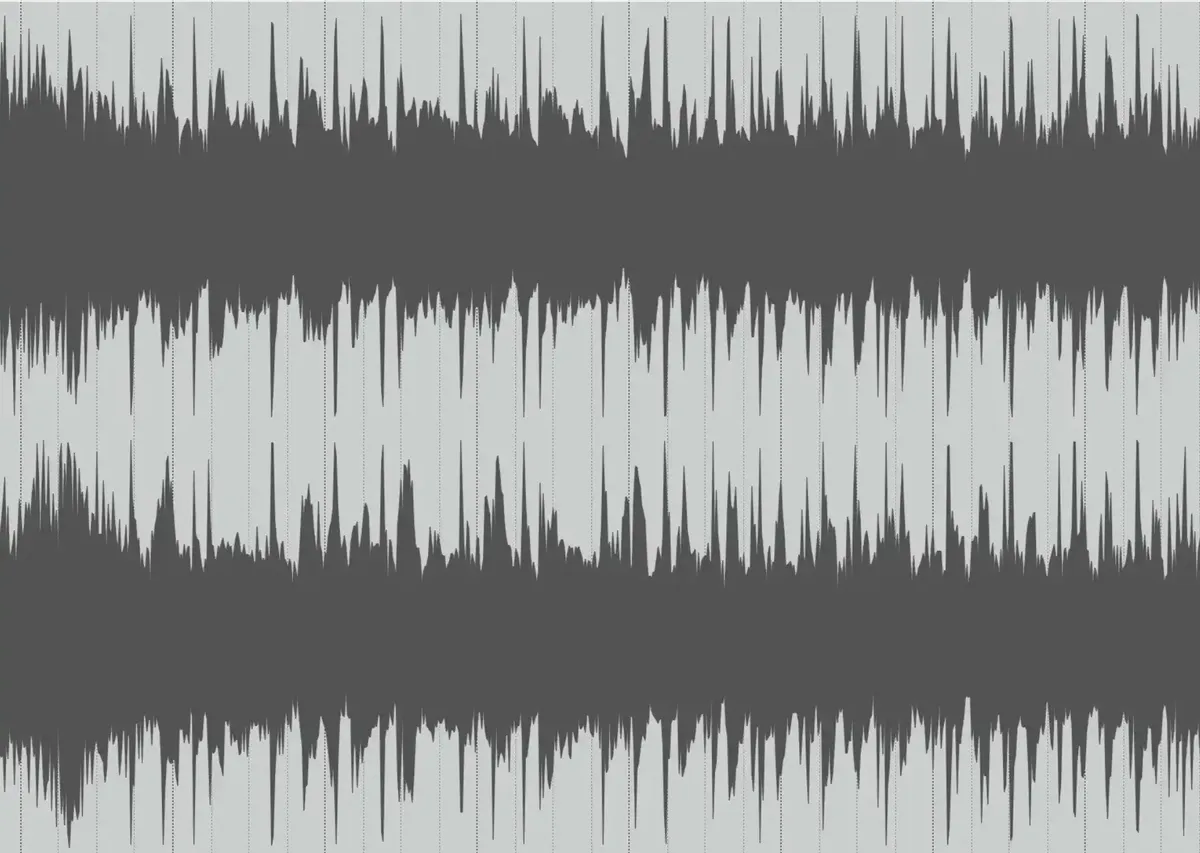
You can clearly see the transients (the spikes) of the drums and the details of all the sounds.
Below is what the song would look like if it’s maximized for loudness:
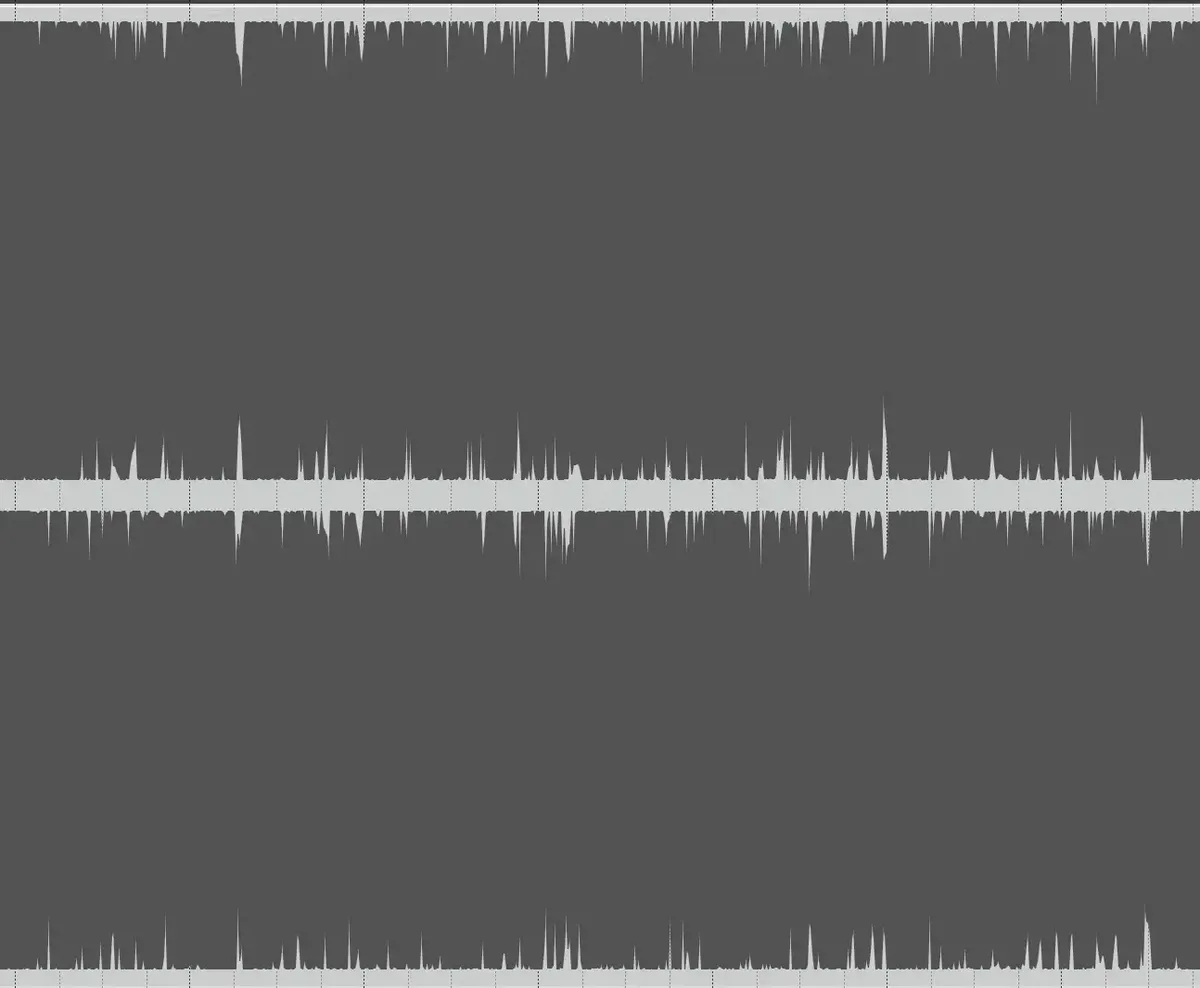
You might be able to tell that so much audio information is lost. We call that a “squashed” or “brickwalled” master.
In practice, what an engineer would typically do to maximize this song’s loudness potential are, but not limited to:
- chop off some of the sounds from the drum hits
- reduce the dynamics of the drum hits (so the louder parts and quieter parts sound more similar in volume)
- remove some low end frequencies from the kick drum (less low end means it’s easier to make it sound louder)
- reduce the dynamics of the strummed guitars and the bass guitar and remove a lot of their low end frequencies
- add some mild distortion to all the instruments
…just to name a few methods. I’m obviously oversimplifying things here, but in a real song, many methods like these are used across the entire project to maximize the song’s loudness potential.
These methods are applied simply for loudness’ sake, and not to make the song sound better. I was really good at making masters that are extremely loud, because that was what most metal bands want, but I’d always disagreed with the practice. I wish more time and energy were put into making the song sound better, not louder.
Also, contrary to some musicians’ and even metal audio engineers’ belief, metal music doesn’t need to be mastered loud. Prior to the loudness war, metal music wasn’t mixed and mastered to be as loud as possible, and that didn’t stop it from sounding aggressive and heavy—the listener can simply turn up the volume knob as needed.
In the end, I no longer wished to spend my time contributing to the loudness war.
The actual mixing and mastering was only part of the whole gig
I enjoy mixing and mastering music; it’s what got me into audio engineering in the first place.
Unfortunately, being a professional mixing and mastering engineer isn’t as simple as opening a project in the studio and starting mixing (I wish).
So what’s it like, then? Well, here’s a list of things that often need to be done that aren’t mixing or mastering:
- client management and communication
- reviewing multitrack files from clients and following up when files were missing
- fixing midi mapping and velocities for drum MIDI What is this? (most bands I worked with provided MIDI for drums)
- prepping sessions for mixing
- invoicing
- keeping track of income and expenses
- keeping track of clients
- keeping track of business expenses for tax filing
- keeping track of my bookings to make sure I didn’t take on too much or too little
- managing schedule changes
- filing taxes
- managing my studio website and keeping it updated
- paying for health insurance, setting aside money for retirement etc
…the list goes on.
So really, I signed up for mixing and mastering for money, but it always felt like half the time I had to be doing many other things other than mixing and mastering.
I got old and priorities shifted
I got into audio engineering when I was 19 years old, having just started my first year in university. I wanted to hustle—holing up in my bedroom studio to finish up an album all night while chomping on a greasy Domino’s pizza at 2 a.m. sounded like the dream.
But in the next 10 years, I:
- graduated from university
- got married
- went through apartment hunting in a city ripe with housing affordability issues (Toronto)
- got a car loan
- started to think about having kids
- started to think about getting a mortgage
- got much older (I’m 30+ now)
- broadened my interests so my whole personality isn’t just “metal head” and “metal audio engineer”
…you know, all the adulty stuff.
So then, hustling all the time stopped being appealing. Being your own boss was great and all when I was too young to think about—or realize—the tremendous benefits that a stable income could bring (e.g., much easier approval on any loan applications).
Freelancing/self-employment has many drawbacks compared to a full-time, salaried position:
- My work output was directly tied to how much I earned (taking vacation and being sick, depending on the duration, meant earning less money).
- I was solely responsible for finding work to do.
- I had to pay for any software or equipment upgrades (writing off doesn’t really save you that much and there are many things you can’t write off).
- I often had to take on projects that I didn’t like because it paid well, or I had a cancellation.
- How well my business was doing was directly impacted by society, the economy, and just world affairs in general (e.g., way less business during COVID).
- No employer-matched pension plans.
- No extended health insurance coverage.
- Much harder to maintain work-life balance.
…among many others.
I didn’t mind (or even think of) those while I was younger with different priorities and less responsibilities, but now I really value being able to clock off at 5 and spend the rest of the day doing things I enjoy (such as blogging and learning European Portuguese) and spend time with my wife.
I lost interest in mixing and developed an interest for video production
I mixed metal music for 10 years and I just got bored of it.
Mixing metal music in general, at the end of the day, boils down to the same sets of techniques, skills and expectations—that’s my opinion after mixing countless metal records in a decade’s time.
I’m not saying that mixing metal is easy—in fact, as someone who did mix some pop music, I found metal to be incredibly hard to mix because there’s so much distortion while all the elements are expected to be well-defined at the same time.
But once you’ve been doing it over and over that many times for a long time, you will naturally have mastered the craft. This is not me tooting my own horn, because any professionals with 10+ years of experience in a specialization will achieve some form of mastery in their craft.
As a result, in the last couple of years of my audio engineering career, I started to stop finding it fun to mix a new client project because I knew exactly what they expected, and I knew exactly how to deliver that.
Coincidentally, at the same time, I started my YouTube channel and self-taught video production. During the process, I fell in love with making videos and then doing post-production in Final Cut Pro (yes, I love making videos specifically in FCP).
Eventually, I got a full-time, salaried job as a videographer and video editor, thereby giving me the opportunity to retire from professional audio engineering work and embark on a new career.
. . .
Sometimes we are so focused on moving forward that we forget to pause and reflect why we are on this path and where we are going.
I realized in the end that I was no longer mixing professionally because I enjoyed it. I was doing it simply because “metal audio engineer” had been my identity for so long, that the thought of quitting it never even occurred to me.
I never stopped to reflect if this was actually what I had wanted. I just thought I was so lucky that I was steadily getting clients when there were many audio engineers out there struggling to fill their schedule or just trying to get their career off the ground.
But life changes, we change, our priorities change, our interests change. Even though the decisions we make affect our future, we make them in the present. Since we can’t predict the future, we shouldn’t be bound by our past selves’ decisions.
When I finally took down my studio website that had served me for 10 years, I felt fulfilled and content that I helped many bands and put out many great-sounding tracks to the world.
I also felt relief, like I finally allowed my audio engineer self to retire.
Footnotes
Drum MIDI
Drum MIDI is used to trigger samples in a drum sample library. It’s basically a replacement of having to go into a recording studio to record drums the old-fashioned way.
In the post-2010 era modern metalcore—the metal subgenre I specialized in—a majority of the bands use samples for drums and even bass guitar rather than record them in a studio simply because the sound of that era of modern metalcore largely stemmed from a dozen or so influential bands that popularized the genre, and those bands used all samples for the drums.
As a result, the modern metalcore sound is extremely hyper-polished, to the point where it’s impossible to achieve the sound without any use of drum samples. At the time, a majority of modern metalcore (and post-hardcore, if you are familiar) bands chose to just use samples for the drums for stylistic reasons. This is why 99% of the bands I worked with would send me a drum MIDI file, not recorded drum tracks. ↩︎
Reply via email. Subscribe to my blog via email or RSS feed.